It was a typical morning, and I was brewing my daily shot of espresso when suddenly, an alarming twinge shot through my wrist. I froze, grimacing at the dull ache that hadn’t been there the day before. After years of grinding coffee beans, pulling shots, and perfecting latte art, I hadn’t realized how much my humble tamper had been silently wreaking havoc on my wrist health. That lightbulb moment made me question—could my passion for espresso be undermining my own well-being?
Why Wrist Pain Can Sneak Up on Even the Most Enthusiastic Baristas
Wrist pain among coffee lovers isn’t just a fleeting annoyance; it can become a persistent obstacle and warning sign of deeper issues. Repetitive motions, excessive force, and poor ergonomics—especially with tools like tampers—are often to blame. Notably, a study published in the Journal of Occupational Rehabilitation highlights how ergonomic interventions can significantly reduce musculoskeletal discomfort in repetitive tasks. For those of us who brew multiple cups each day, ignoring these warning signs could lead to long-term injuries, limiting our ability to enjoy the craft we love.
In my early days, I made the mistake of ignoring wrist discomfort, thinking it was just part of the routine. But that oversight only worsened my pain and affected my workflow. When I finally paid attention—researching and testing different tampers—I discovered how proper tools could make a real difference. So here’s the good news: upgrading to ergonomic tampers, designed with wrist health in mind, can transform your espresso experience and save you from future pain. And that’s exactly what we’ll explore next.
Is an ergonomic tamper worth the buzz or just another gimmick?
Honestly, I was skeptical too. Early on, I believed that all tampers did the same job—pressing coffee evenly. But my firsthand missteps, like overexerting my wrist and developing tension headaches, proved otherwise. Learning from that mistake, I delved into testing the latest ergonomic tampers of 2026. What I found was eye-opening: these tools are engineered not just for consistency but for your well-being. If you’ve ever worried that investing in fancy gear won’t make a difference, I get it. But the right tamper could be the game changer you need—more consistent shots, less strain, and a future free from wrist woes. Ready to see which options stood out? Let’s dive into the top four ergonomic tampers tested for 2026 and their benefits.
Choose Your Equipment Wisely
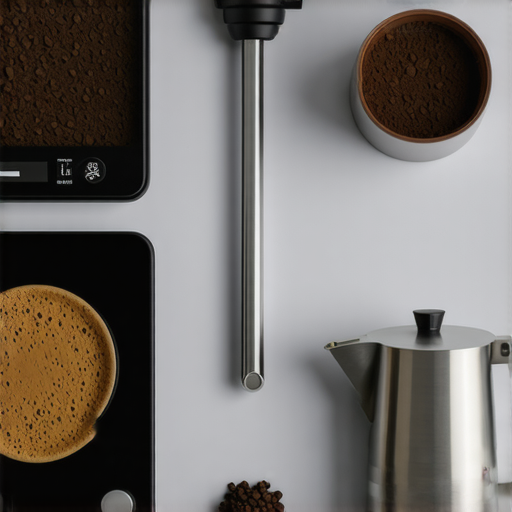
Select a high-quality coffee scale with 0.01g precision that matches your workflow. For your tamper, opt for one that fits your portafilter size, like a 58.5mm tamper, to ensure even pressure. Use a durable milk pitcher with a fine spout designed for latte art, such as a ceramic-coated one for better heat retention and smooth pouring. For knocking out used coffee, pick a knock box with a rubber bottom to minimize noise and prevent kitchen odors. I once replaced my old, metal knock box with a silicone-lined model, which significantly reduced clanking noise and made cleanup easier. Find these tools at trusted sources like this collection for reliable quality.
Set Up Your Workspace for Efficiency
Arrange your scale, tamper, and pitcher within arm’s reach to streamline your process. Use a constant lighting source to see your espresso shot clearly, as lighting impacts your ability to judge extraction and milk frothing. Performing a dry run before brewing helps calibrate your tamp pressure and shot timing. I often place my tamping station at the same spot every day to build muscle memory, which improved consistency. Additionally, ensure your grinder is dialed in for the right grind size—a crucial step that directly impacts extraction quality. Regularly calibrate your scale and grinder settings as per manufacturer recommendations, referencing guides like this calibration guide to maintain precision.
Perfect Your Tamping Technique
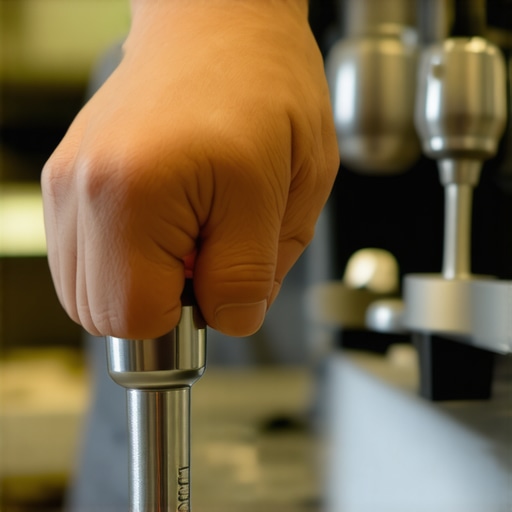
Insert the portafilter into your grinder, dose the coffee evenly, and then distribute it uniformly using a distribution tool or tapping the sides gently. Place the tamper centered over the coffee puck, applying firm, consistent pressure—think of it as stamping with purpose rather than brute force. Using a calibrated tamper with a fixed depth can prevent uneven puck density and channeling. During my practice, I found that applying even pressure with a flat-tadded tamper reduced shot variability dramatically. Practice your grip to avoid wrist strain—imagine turning a door handle smoothly—until your tamping feels automatic. For added control, consider a calibrated tamper kit available at this resource.
Dial in the Extraction and Milk Frothing
After tamping, lock the portafilter into your espresso machine and start the shot, monitoring flow rate and shot time. Aim for a steady, syrupy flow—this ensures optimal extraction. Meanwhile, froth your milk in your preferred pitcher, positioning the spout close to the surface for microfoam. Use a thermometer to keep milk temperature around 140°F (60°C); over-heated milk destroys latte art potential. For uniform foam, position the steam wand just below the surface and angle it for whirlpool motion, which I learned from extensive this tutorial. Practice pouring with consistent wrist movement to create intricate designs, adjusting tilt and height as you go. Remember, patience with each step translates into better flavor and presentation.
Many baristas and coffee enthusiasts assume that all accessories, like milk pitchers, coffee scales, knock boxes, and tampers, are interchangeable or that their basic functionality suffices. However, this misconception can lead to suboptimal espresso quality or even equipment damage. One of the most overlooked nuances is the importance of pairing accessories specifically tailored to your workflow and machine specifications. For instance, choosing a milk pitcher with an incompatible spout shape might hinder your latte art, despite having a high-quality steamer. Similarly, selecting a coffee scale with inadequate precision could skew your dosing, leading to inconsistent shots.
debunking the myth that expensive equals better is a common trap. While premium accessories often offer enhanced durability or precision, their benefits are null if you don’t understand the subtle differences that align with your barista style. For example, a precision coffee scale with 0.01g accuracy might seem excessive, but for extraction consistency, it can be a game-changer—if you know how to interpret the data correctly. Avoid falling into the trap of simply upgrading to the latest gadget without understanding its role in your process.
Another overlooked aspect is that some accessories, like knock boxes with rubber bottoms, are designed not just for convenience but to preserve machine and countertop integrity by reducing noise and vibrations. Ignoring such details may seem trivial but can lead to long-term issues like noise pollution or furniture damage. Therefore, it’s crucial to evaluate how each accessory’s nuances support not just aesthetics but also your equipment’s longevity and your own ergonomics.
What advanced mistakes do seasoned baristas often make when selecting accessories?
One common mistake is neglecting the compatibility of tampers with portafilters. For example, using a 58mm tamper on a 58.5mm portafilter might seem negligible but can cause uneven tamping, channeling, and inconsistent extraction. Recent studies emphasize that even slight mismatches between accessories and equipment can impair shot quality (see this guide). The key is understanding the intricate differences—like weight distribution in tampers or spout alignment in pitchers—that influence the final product. Always opt for accessories that are precisely tailored to your specific setup, and don’t settle for generic solutions.
Additionally, many professionals overlook the importance of regular maintenance of accessories. For instance, a ceramic-coated milk pitcher can become less effective if neglected, leading to buildup that affects heat retention and pour quality. Proper cleaning and calibration are essential to preserve the nuanced advantages these tools offer. Remember, investing in high-end accessories is only half the equation; understanding their advanced functionalities and maintaining them properly ensures you extract the best from your gear. Have you ever fallen into this trap? Let me know in the comments.
Maintaining your coffee accessories isn’t just about prolonging their lifespan; it’s about ensuring each shot is as consistent and high-quality as possible. Regularly inspecting your tools, from milk pitchers to scales, and performing targeted upkeep routines can make a significant difference in your brewing results. For instance, I personally schedule weekly deep cleanings of my milk pitcher using a mixture of warm water and mild detergent, followed by thorough rinsing, as recommended in this guide. This routine helps preserve the non-stick coating and prevents milk residue buildup that can impede cleanliness and heat retention.
How do I keep my tools performing over time?
One essential approach is the consistent calibration of your coffee scale. Over time, scales can drift, leading to inaccuracies that affect dosing and extraction precision. I personally use a precision scale calibrated weekly with known weights. This ensures that my measurements stay within the tight tolerances needed for espresso mastery. Additionally, regular lubing and inspection of your knock box’s rubber components can prevent tearing and reduce noise during use, as shown in this article.
Investing in quality tools pays off in the long run
While high-end accessories may seem costly upfront, their durability and performance often justify the expense. For example, upgrading to a high-quality coffee scale with 0.01g precision has transformed my dosing accuracy, reducing shot-to-shot variability. Similarly, pairing this with an ergonomic tamper minimizes wrist strain during tamping, ensuring consistent puck density. The key is to select tools that match your specific workflow and to maintain them diligently. This proactive care guarantees that your investment continues to deliver superior espresso over years of daily use.
Why long-term maintenance of tools matters for scaling up
As your setup grows, whether in a home or commercial environment, scalable maintenance routines become critical. Establishing scheduled cleaning and calibration routines for your tools will prevent unexpected downtimes and maintain high standards. For example, as I increased production, I adopted a weekly cleaning protocol for my milk steaming equipment, utilizing specialized cleaning solutions available at this resource. This ensures hygiene remains impeccable, and flavor profiles stay unaltered. When scaling, consider investing in tools designed for easy disassembly and maintenance; it simplifies routines and saves time.
Where can I get tools and advice for ongoing upkeep?
If you’re looking for trusted sources and expert insights, check out this contact page. Connecting with experienced baristas and accessory specialists can help tailor maintenance routines to your specific setup. Remember: the secret to consistently amazing espresso is not only in the initial equipment choice but also in the ongoing care and fine-tuning of your tools. Try implementing a monthly deep cleaning of your coffee scale and a quarterly check of your tamper for any wear or misalignment—small actions that yield big results in the long run.
The Hidden Truths Baristas Don’t Talk About
One of the biggest lessons I learned is how seemingly minor differences in tools can have outsized impacts on your espresso quality. For example, a slight mismatch between your tamper size and portafilter can cause uneven puck compression, leading to channeling and inconsistent shots. My lightbulb moment was realizing that investing in a perfectly calibrated, fixed-depth tamper not only improved shot consistency but also reduced wrist strain. This personal insight reinforced that understanding your equipment intimately is crucial—it’s not just about buying the fanciest gear but selecting what truly fits and supports your workflow.
Another underestimated aspect is maintenance routines. Regularly cleaning and calibrating your scale, tamper, and milk pitcher might seem tedious, but neglecting these can cause subtle errors that snowball into larger problems. For instance, scale drift can fool you into dosing inaccurately, undermining your espresso’s precision. My tip: schedule weekly check-ins with your tools, and you’ll notice a leap in your brewing mastery. Small, consistent efforts like these create a foundation for consistently excellent coffee.
My Top Picks to Elevate Your Coffee Game
Over the years, I’ve curated tools that truly make a difference. A high-precision coffee scale with 0.01g accuracy, such as those recommended in this guide, has been transformative for my dosing and extraction. Pairing that with a calibrated, fixed-depth tamper from this resource ensures each shot hits the mark.
For milk frothing, I swear by ceramic-coated pitchers with narrow, rounded spouts, which I discovered greatly improve latte art precision. To keep my setup noise-friendly and odor-free, I transitioned to a silicone-lined knock box, solving multiple issues in one go. Trust me—these curated choices made my routine smoother and my results more stunning. Explore this collection for ideas that match your aspirations.
Your Next Step in Coffee Excellence Better Than Ever
Remember, mastery isn’t a sudden leap but a series of deliberate, mindful upgrades and routines. Each small adjustment, from calibrating your scale regularly to selecting tools tailored perfectly for your machine, compounds into a significant improvement. I challenge you to evaluate your current setup and identify one tweak you can implement this week. Whether it’s cleaning your milk pitcher more diligently or practicing consistent tamping pressure, these actions pave the way for coffee that truly excites and inspires. Your journey toward espresso excellence continues now—start with confidence, and enjoy every sip. If you’ve faced specific challenges with your tools or process, share your experience below—I’d love to hear your story.