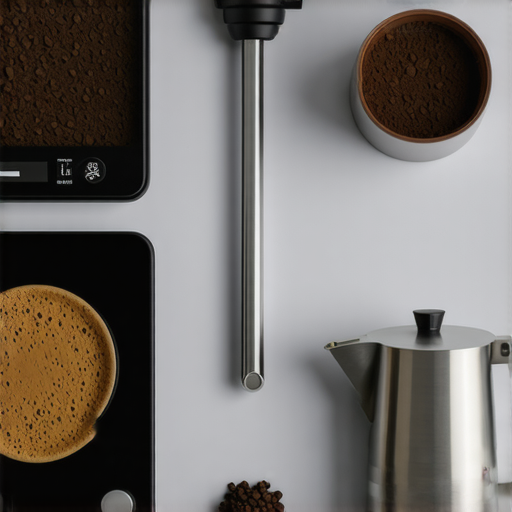
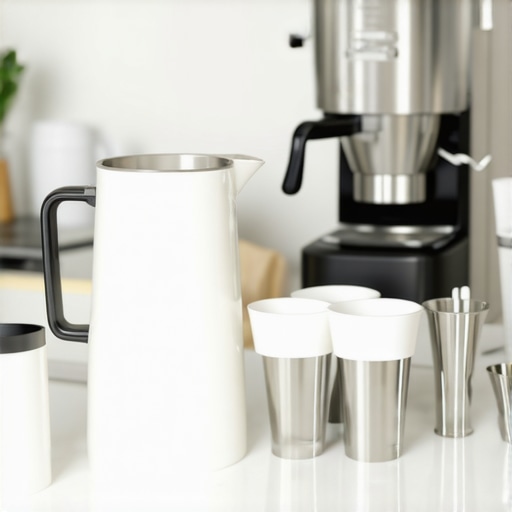
It was a frustrating morning in my tiny coffee corner. I was attempting my first latte art swirl, and instead of the elegant heart I envisioned, my milk pitcher betrayed me—spills, uneven frothing, and a mess to clean. That lightbulb moment made me realize how crucial the right barista accessories are. For years, I thought, “A good espresso shot is all that matters.” But I quickly learned that perfect coffee presentation relies heavily on tools like milk pitchers, tampers, and scales. If you’re tired of mishaps and want your coffee to match those flawless shop-quality images, you’re in for a treat. Today, I promise to guide you through the essentials that elevate your brewing game, starting with the accessories that truly make a difference.
Perfect Your Tamp for Consistent Shots
Start with a quality espresso tamper, as it’s the foundation of a balanced extraction. Place your portafilter on a stable surface and press down with even pressure—around 30 pounds—to ensure uniformity. I once replaced my cheap tamper with a calibrated one, and my shots became noticeably more consistent, reducing bitterness and enhancing flavor.
Get to Know Your Tamper’s Feel
Hold the tamper comfortably and press with controlled force, feeling the resistance. A good tamper should fit your hand naturally, allowing you to apply steady pressure without slipping. Regularly check for flatness and re-calibrate if necessary, as uneven tamping can cause channeling. For more tips, visit this guide.
Choose and Use the Right Coffee Scale
A precise coffee scale is essential for measuring both coffee grounds and extraction weight. Place the portafilter on the scale and zero it before loading grounds. Use consistent dosing—around 18-20 grams for a single shot. During extraction, watch the weight closely; a typical shot takes about 25-30 seconds, yielding roughly 36 grams of espresso. My mornings changed dramatically when I started timing my pulls with an accurate scale. To find the best one, explore this comprehensive guide.
Master Milk Texturing with a Quality Pitcher
Using a high-quality, well-designed milk pitcher can make a significant difference. Fill it no more than two-thirds for better control. When steaming milk, position the wand just below the surface and introduce air with gentle, consistent motion until the milk reaches around 140°F (60°C). Then, submerge the wand deeper and swirl for a smooth, glossy texture. I found that upgrading to an ergonomic pitcher helped me learn latte art faster. For detailed tips, check out this resource.
Maintain Your Tools for Peak Performance
Regular cleaning of your accessories is crucial. Descale your milk pitcher monthly with vinegar to prevent residue buildup. Keep your tamper flat and free of dents; a warped tamper results in uneven pressure. Always zero your coffee scale before use to maintain accuracy. To keep everything in top shape, visit this maintenance checklist.
Many coffee enthusiasts believe that choosing the right gear is straightforward, but in reality, mastering barista accessories involves navigating nuanced pitfalls and debunking common myths. For instance, the idea that a heavier tamper automatically yields better shots is misleading. While weight can influence pressure, an ergonomic design and proper technique are far more critical for consistent tamping. Relying solely on weight neglects the nuanced ‘feel’ that experienced baristas develop, which is essential for fine-tuning extractions.
Another common misconception revolves around coffee scales. Some think that any digital scale suffices, but precision and response time are overlooked. An inaccurate or slow scale can disrupt your timing, resulting in under-extraction or bitterness. Investing in a high-quality, responsive scale—like those recommended in this guide—prevents these issues and enhances consistency.
Why Do Many Baristas Overlook Tool Maintenance Routine?
Mastery isn’t just about selecting the right tools; it’s equally about maintaining them diligently. Many get into the habit of using their accessories without proper upkeep, leading to performance degradation. For example, neglecting to clean your milk pitcher thoroughly can introduce residual fats that hinder perfect microfoam creation. Regular maintenance ensures your tools perform optimally, as emphasized in this maintenance checklist. Moreover, warped or dents in your tamper or knock box can subtly affect your coffee quality and speed. Recognizing these less obvious issues can elevate your brewing efficiency significantly.
Moving to accessories like the knock box, many underestimate its importance. A poorly positioned or unstable knock box can cause spills and slow work rhythm during busy mornings. Proper placement and choosing a sturdy, easy-to-clean model streamline your workflow—details often overlooked but vital for professional results, as discussed in this guide.
#IMAGE_PLACEHOLDER_C#
Advanced baristas also understand the importance of nuance in accessible tools. For example, the texture of your milk pitcher’s spout can influence the microfoam’s consistency, affecting latte art precision. Upgrading to an ergonomic silhouette and smooth finish can significantly reduce operator fatigue and improve results. Dive into these comprehensive tips to fine-tune your equipment choices. This knowledge separates the casual enthusiast from the seasoned professional.
Don’t fall into the trap of thinking that high-end gear alone guarantees great espresso. Proper technique, relentless maintenance, and understanding nuanced differences in tools are what truly unlock your barista potential. Have you ever fallen into this trap? Let me know in the comments, and if you’re ready to elevate your coffee game, explore our detailed guides on must-have accessories and precision tools.
I really relate to the frustration of trying to perfect latte art, especially when the equipment isn’t quite up to the task. Upgrading to a well-designed milk pitcher made such a difference for me; it’s made steaming and pouring so much more controlled. I’ve also found that consistent cleaning routines significantly improve microfoam quality and overall flavor. It’s surprising how tiny residues can affect the micro-porosity in milk. Regarding tampers, I used to think that heavier was better, but I learned that technique and fit matter more—an ergonomic tamper that fits my hand has helped me apply even pressure more naturally. I’m curious, have others found that investing in high-end accessories actually accelerates learning or is it more about developing technique over time? I’d love to hear how others have balanced equipment upgrades with skill development.
Reading through this guide, I resonate with the importance of maintaining your tools to achieve consistent results. One thing I’ve learned over time is that even small dents or warping in a tamper can drastically affect tamping pressure distribution, which impacts the shot quality. I recently started calibrating my tamper every few months using a simple flat surface and it’s made a noticeable difference in my espresso shots.
I’d also add that investing in a good coffee scale was a game-changer for me. Some scales tend to respond slowly or have inconsistent readings, but I went for one with quick response times and auto-tare functions, which makes the whole process smoother. Do any seasoned baristas here have recommendations for durable, responsive scales that won’t break the bank?
Lastly, regular cleaning of milk pitchers with vinegar works wonders for microfoam quality. How do others keep their equipment in tip-top shape without spending too much time on maintenance? Would love to hear some of your routines and tips for longevity and performance enhancement in espresso tools.